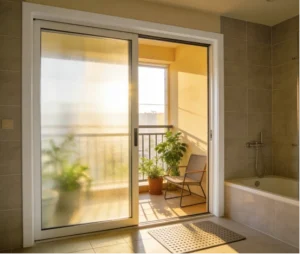
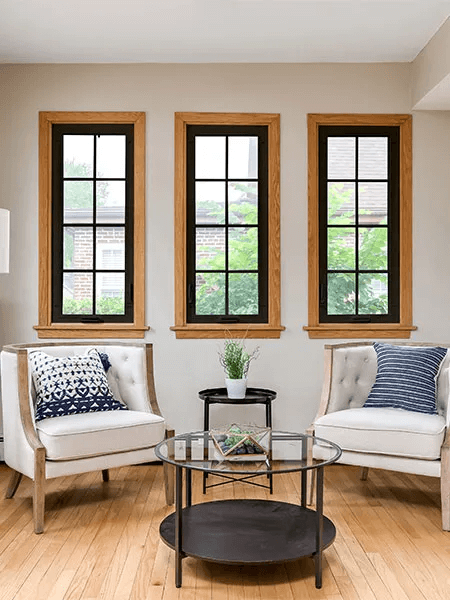
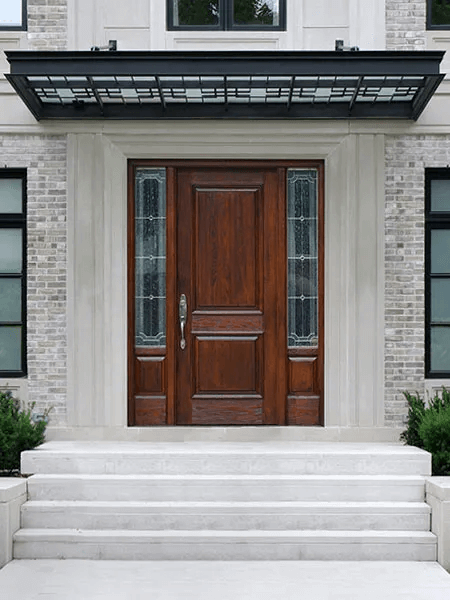
Choosing between aluminum sliding glass door and aluminum-clad wood sliding glass doors isn’t just a design debate—it’s a practical decision that ends up affecting how a home feels in winter, how bright the living room looks at noon, and even how long the frames stay good-looking under real weather conditions. Modern architects and builders talk about this comparison a lot, especially now that homeowners care more about insulation and daylight than ever.

Below are four questions this guide actually answers— that disappears once construction begins:
- Which offers better insulation and real energy savings?
- Which suits modern homes vs traditional interiors?
- How do durability and day-to-day maintenance differ?
- What happens with lead times and frame design in real projects?
Types of Wood Used in Aluminum-Clad Wood Sliding Glass Doors
Aluminum-clad wood sliding glass doors mix exterior protection with the indoor comfort that only solid timber provides. The wood species changes not only the look but also how the door behaves over time.
Pine
Still the most common choice. Pine is easy to work with and widely available, but modern systems rarely use raw pine. Most are finger-jointed—a technique that boosts strength and helps avoid the classic wood problems like twisting or bowing after a winter of dry heat. The look is clean and bright, suitable for both stain and paint.
Meranti
A bit heavier and richer in tone. Meranti leans toward reddish-brown hues that work nicely in tropical-style houses or spaces with warm lighting. Designers like it because it sits somewhere between “affordable” and “luxury” without acting fragile.
Oak
Oak is the “no regrets” premium choice. It has deep grain patterns and a solid, reliable feel. Many high-end villas in Europe still pick oak because it ages well—almost like leather that looks better after years of use.
The combination of premium solid wood and aluminum gives sliding doors a natural grain inside and a tough shell outside. Quite a rare mix in today’s mass-market door systems.
Key Differences in Materials, Colors & Finishing
Aluminum-Clad Wood Sliding Glass Doors
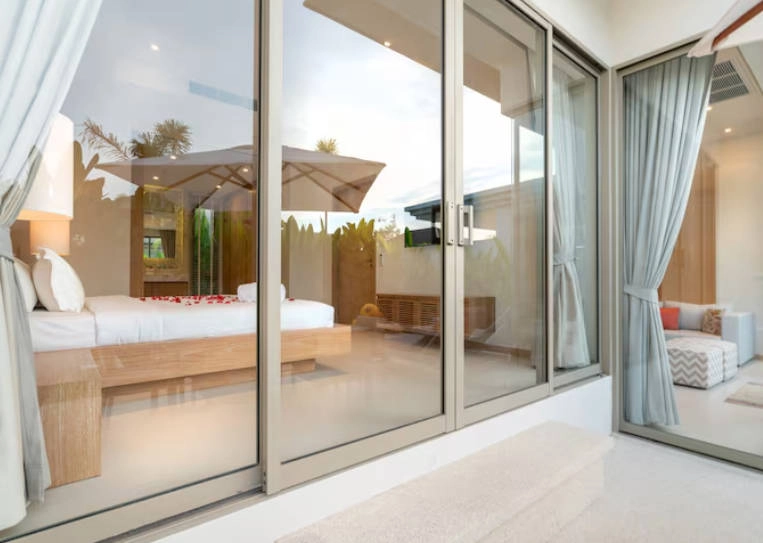
The biggest advantage is the two-sided personality: aluminum outside for weather, wood inside for comfort. Exterior cladding usually comes in 200+ RAL colors, plus marine-grade anodized options for salty coastlines.
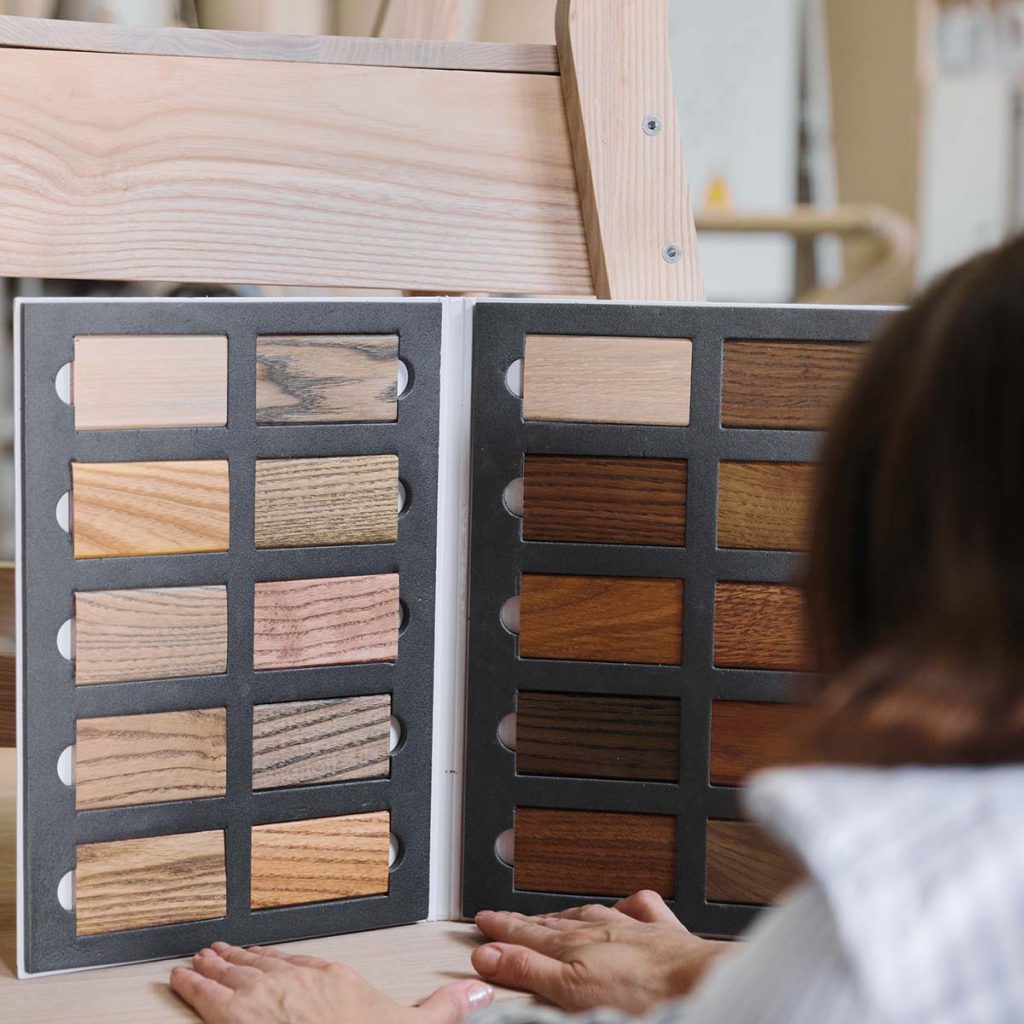
Inside, the wood can be stained to bring out grain, oiled for that matte “Nordic” look, or fully painted for interiors with a strict color palette.
Pure Aluminum Sliding Glass Doors
Pure aluminum frames also offer many colors, especially powder coating. The downside? The inside looks like… aluminum. Sleek, yes. Warm, no. Some homeowners love it; others say it feels a bit “commercial” after living with it for a year.
Put them side-by-side and the difference is obvious. One feels like architecture; the other feels like a clean industrial frame. Depends on the project.
Thermal Performance & Energy Efficiency (Window U Factor 2025)
Energy rules get tougher every year. Builders report more clients asking about winter comfort and heating bills than ever before.
Wood naturally insulates, so aluminum-clad wood frames usually perform better. Metal conducts heat; wood doesn’t. Even with high-end thermal breaks, a metal frame still feels cooler when touched during freezing mornings.
Both aluminum and aluminum-clad wood can hit U-factor below 1.0 W/m²K when matched with triple-pane Low-E glass. That’s already enough to meet Energy Star requirements across cold-climate regions like Canada or northern Europe.
But in real winter use, wood interiors simply stay warmer. You notice it especially on big doors—anything above 3 meters wide.
Frame Depth, Sightlines & Glass Area
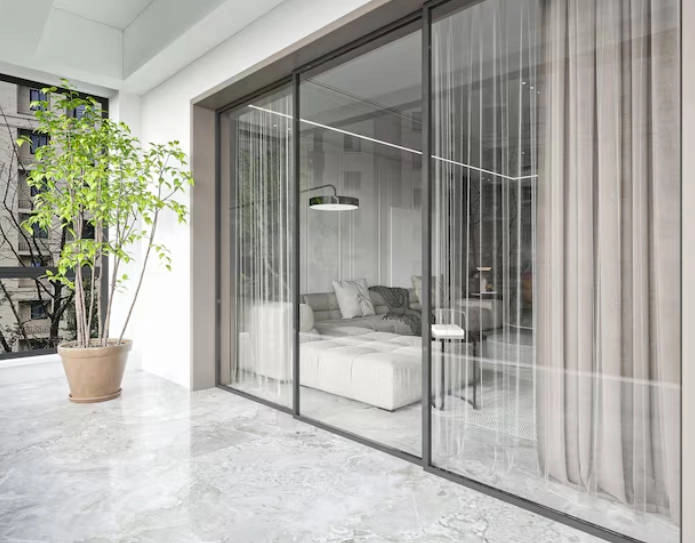
Modern homes chase minimalism, and this is where pure aluminum shines.
Aluminum Frames
- Slimmer
- Narrow sightlines
- More glass area
- Perfect for modern, sharp-edged architecture
Aluminum-Clad Wood Frames
- Slightly thicker because of the wood core
- More visual weight
- A small reduction in glass percentage
- But interiors feel softer and more “complete”
Designers often say:
“You choose aluminum when the house wants to disappear, and aluminum-clad wood when the house wants to feel lived-in.”
Lead Time Comparison (2025)
Lead time matters more than many homeowners expect. Delays can cause expensive domino effects on renovation schedules.
Typical production timelines:
- Pure Aluminum Doors → fastest
- Aluminum-Clad Wood (Pine/Meranti) → moderate
- Aluminum-Clad Wood (Oak) → longest (premium lumber + careful processing)
Commercial projects almost always choose aluminum for this reason alone.
When to Choose Aluminum-Clad Wood Sliding Glass Doors
These doors fit projects where aesthetics and comfort matter as much as durability.
Best for:
- Traditional or transitional architecture
- High interior design requirements
- Homes with strong seasonal temperature changes
- Clients who prefer natural materials inside
They’re especially good for coastal homes when matched with anodized cladding and stainless steel mesh screens. Many oceanfront villas in 2024–2025 chose this combo to balance charm and longevity.
When Pure Aluminum Sliding Glass Doors Win
Pure aluminum takes the lead in ultra-modern houses with straight lines and large openings.
Best for:
- Minimalist homes
- Projects requiring the thinnest sightlines
- Fast construction timelines
- Commercial spaces
Aluminum also performs well in coastal regions due to excellent corrosion resistance, especially with anodized finishes.
Final Recommendation
For warm interiors, natural wood grain, and better winter comfort → aluminum-clad wood sliding door from Hiseng.
For sharper sightlines, fast delivery, and modern style → pure aluminum.
Both are good. The choice depends more on the personality of the house than a spec sheet.
FAQ
Q: What are the main advantages of aluminum-clad wood sliding glass doors?
A: Warmer interior surfaces, real wood aesthetics, better natural insulation, and the same tough aluminum exterior used in pure aluminum systems.
Q: Are aluminum-clad wood systems good for coastal homes?
A: Yes. When fitted with marine-grade anodized cladding and corrosion-resistant hardware, they work well even in harsh salt-air climates.
Q: Can aluminum-clad wood sliding doors have slim sightlines?
A: Modern designs now have very narrow meeting stiles—around 1–3/8 inch—while keeping structural strength.